
A Sales Platform That Cut Quoting From Weeks to Minutes
Over two years, I owned the end-to-end design of a B2B sales and distribution platform now used by around 2,000 people, unifying 6 user groups across 11 access tiers, from platform admins to homeowners, into one cohesive system.
- Role
- Lead Product Designer & Strategist
- Timeframe
- 2 Years
- Platform
- B2B Sales & Distribution Platform
- Design role
- Led product design, alongside a solution architect
- Worked with
- Engineers · Client stakeholders · Directors · Sales and distributors
- ~2,000
- people using the platform
- Weeks → minutes
- time to produce a quote
- 6
- user groups in one system
- 11
- access tiers
Challenge
Unifying a fragmented, legacy B2B operation, used by six different user types across contractors, distributors, and reps, into one clear, scalable platform, without slowing down as the system grew.
Outcome
A platform in daily use by around 2,000 people across six user groups. FastQuote, the guided quoting tool I designed, cut quoting from weeks to minutes. I ran delivery from scoping to QA, then handed the design system and its documentation to the client’s team.
What I did
For two years, I was the core product designer for a complex enterprise platform serving one of North America’s largest HVAC networks, now used by around 2,000 people. I led client and stakeholder workshops, contributed to the platform’s information architecture and navigation, and scaled the core UI design system across 6 user groups and 11 distinct access tiers, from platform admins and homeowners to distributors, contractors, and company reps. I also designed FastQuote, a guided tool contractors use while walking a home with the homeowner, which cut quoting from weeks to minutes. Alongside design, I owned the full Jira pipeline, from sprints and tickets through to QA, and managed project billing, tracking engineering time to keep client invoicing accurate and transparent.
Skills used
Gallery
The Challenge
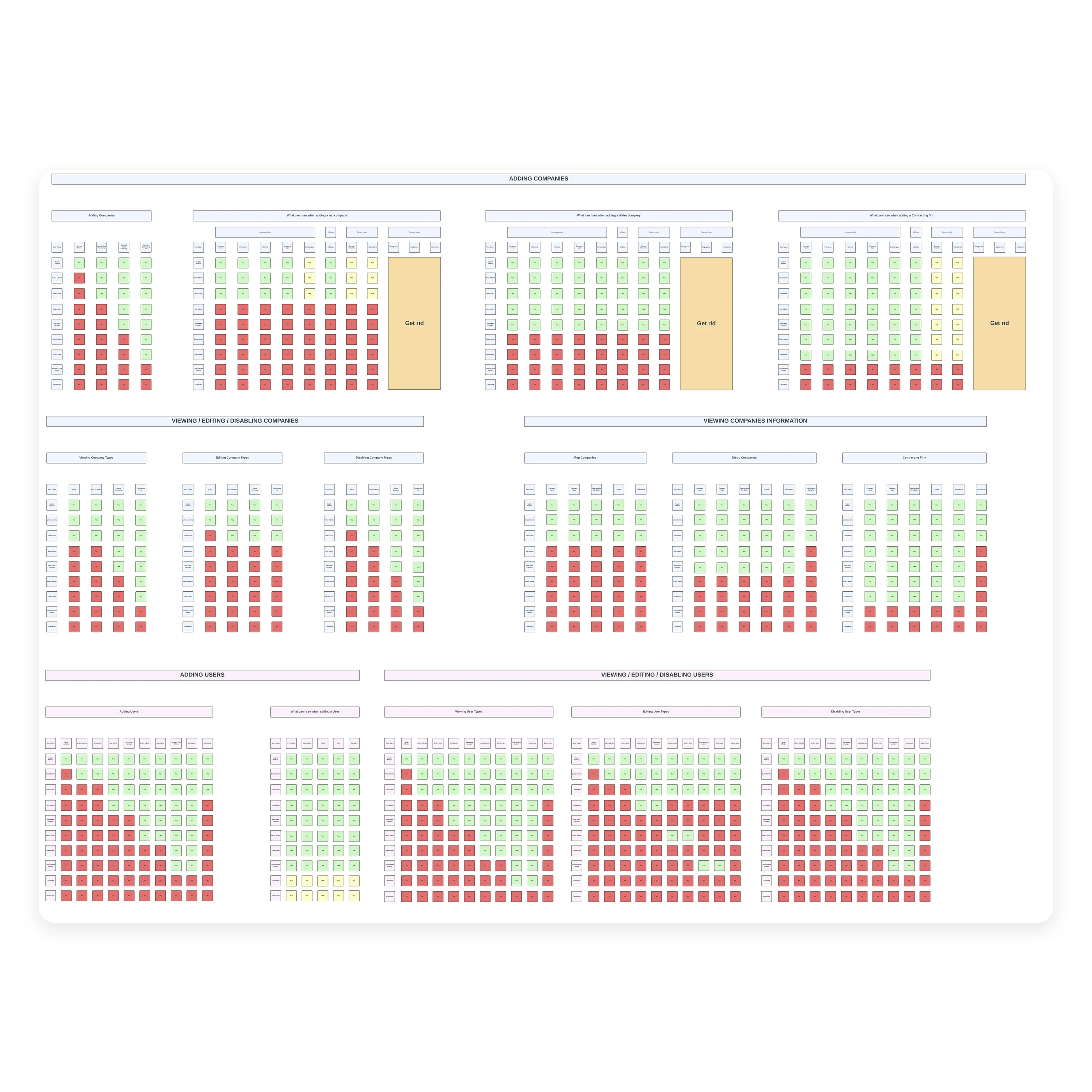
This project's complexity came from its interconnected user ecosystem. The platform had to serve six distinct user groups, spanning 11 access tiers in total, each with different needs, permissions, and technical UI language: Unico Admins (Super Admin and Admin), Company Reps (Admin and User), Distributor HQs (Admin and User), Distributor Branches (Admin and User), Contractors (Admin and User), and Homeowners.
My mandate was to design the underlying structure for the entire platform, everything from the global navigation down to the behaviour of a single tooltip, ensuring a consistent, intuitive, and efficient experience across all 11 user types. This was a significant information architecture and design challenge, as the platform had to be intuitive for the wide spectrum of users: from tech-savvy sales reps to hands-on, 'on the tools' contractors who are experts in their trade, not in software.
The Process
My first priority was to get up to speed on the industry. I conducted deep domain research into HVAC engineering and the workflows of each of the platform's 6 user groups. This knowledge was essential: it let me lead productive, design-focused workshops with the client and confidently define the scope and functionality of the platform's features.
1. The Workflow for Every Feature
My process for every new feature, from a simple table filter to the entire platform navigation, followed five clear steps:
Step 1: Scope with the Client. I led a design-focused workshop with stakeholders to define the problem and agree on scope and requirements.
Step 2: Rapid Wireframing & Internal Validation. I translated those requirements into a quick, low-fidelity wireframe. Before this ever went to the client, I held an internal review with our front-end and back-end developers to confirm the solution was technically feasible and scalable.
Step 3: Client Approval: With a technically sound wireframe, I presented the solution to the client for feedback and formal sign-off.
Step 4: Ticketing & Handoff: Once approved, I translated the final design into clear, actionable Jira tickets, writing the user stories and epics for the development team.
Step 5: End-to-End QA: As the sole designer, I owned the quality of the experience, testing every feature through dev, stage, and production to ensure it met the client's expectations and our design standards.
2. Key Contributions
This repeatable process was the engine behind the entire platform experience. Key contributions included:
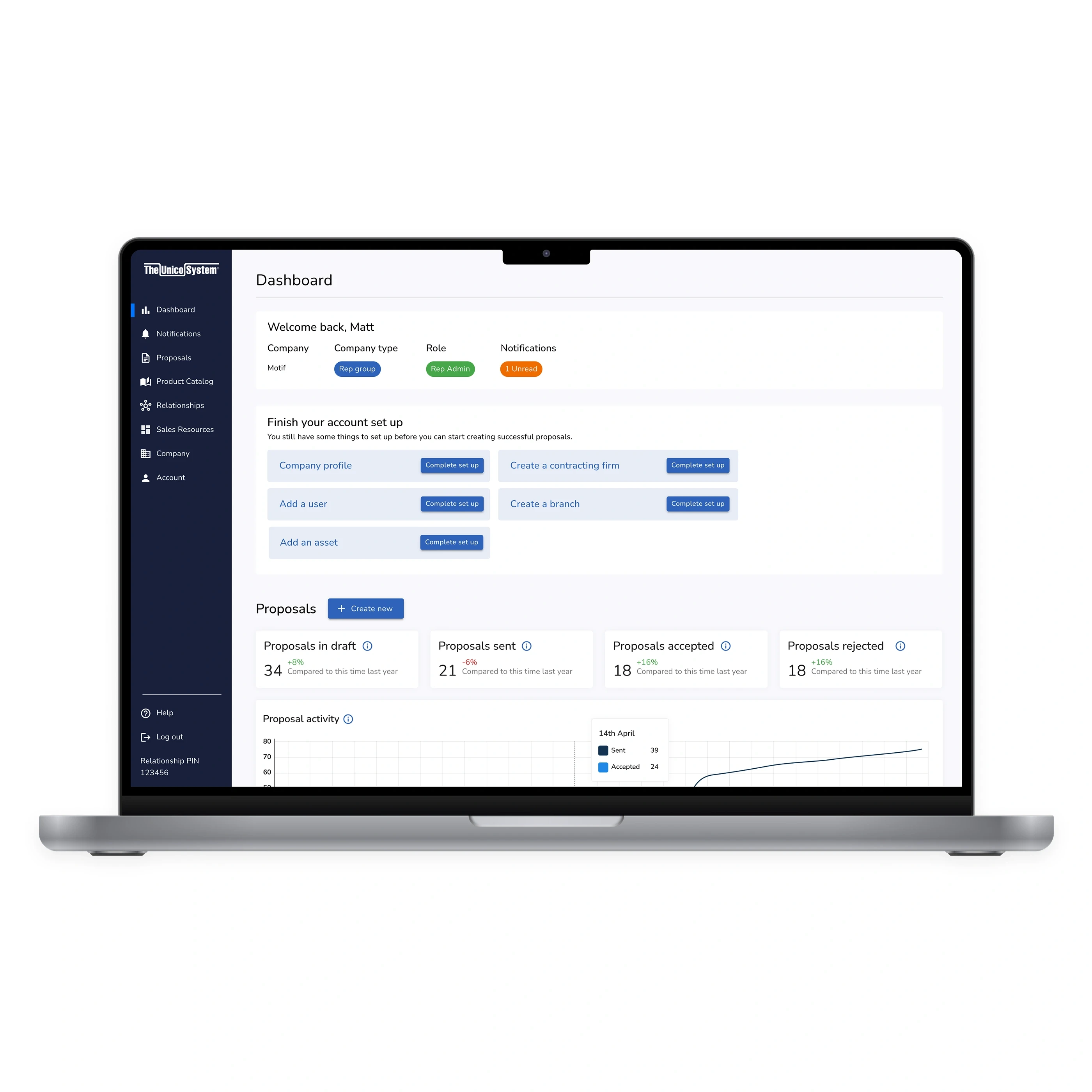
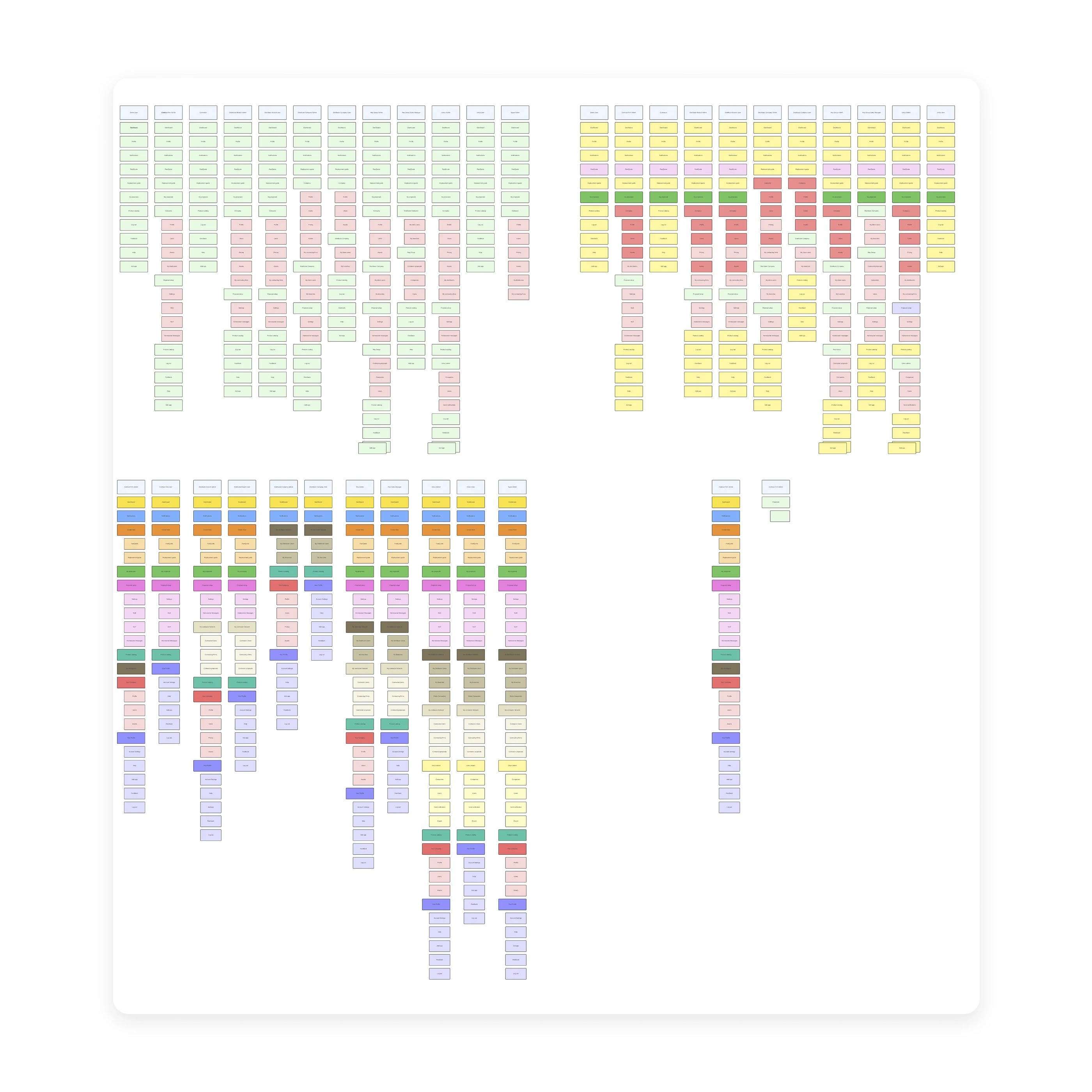
A Complete Navigation & Information Architecture Overhaul: I evolved the platform's navigation from a basic proof of concept into a robust final system, designing 10 distinct sitemaps and navigation patterns across the platform's 11 access tiers (the Homeowner tier uses a single public quote-review link rather than a full sitemap, but still triggers real state changes in the system when a quote is accepted or declined). The final design, including a minimisable sidebar and tab-based system, brought clarity and structure to a complex application.
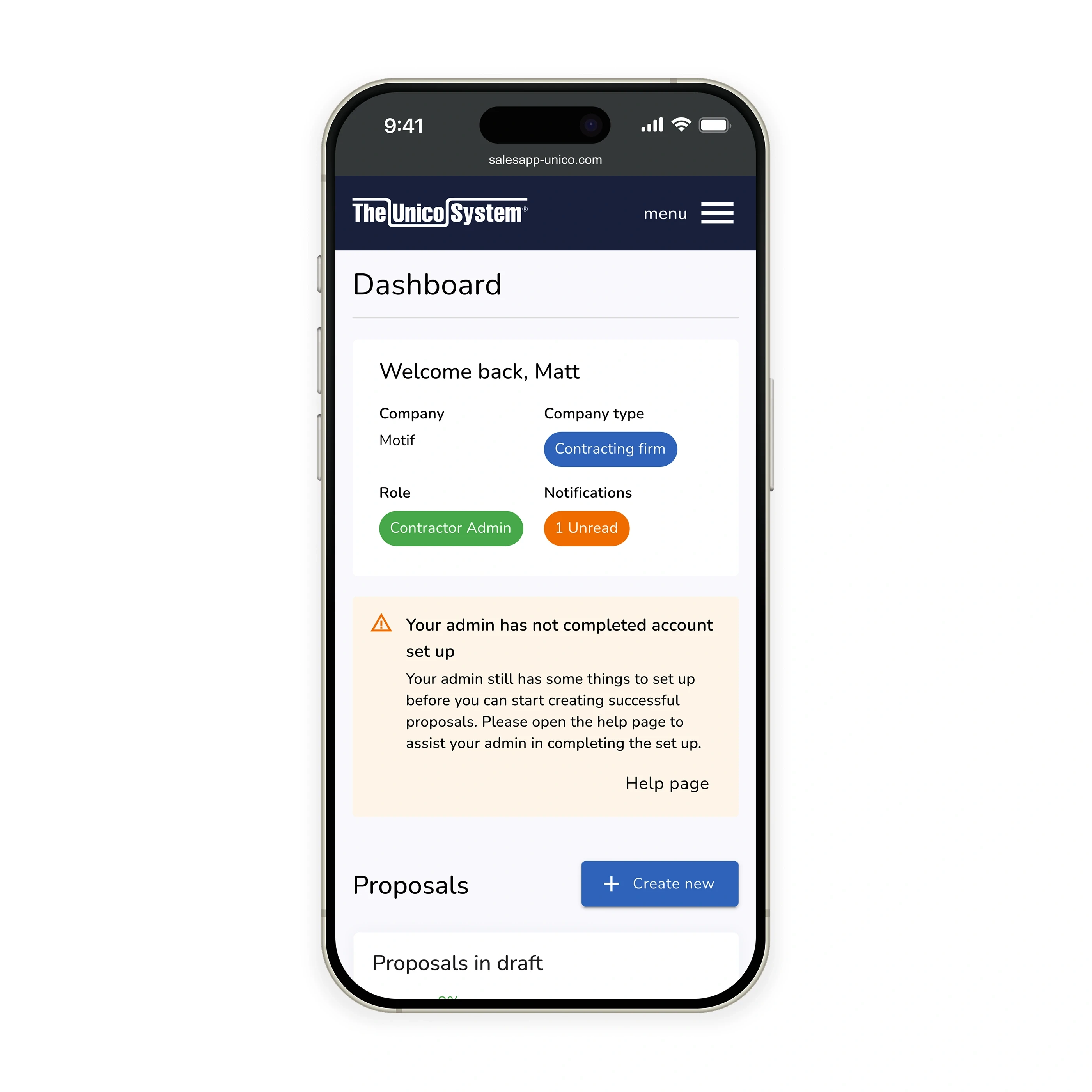
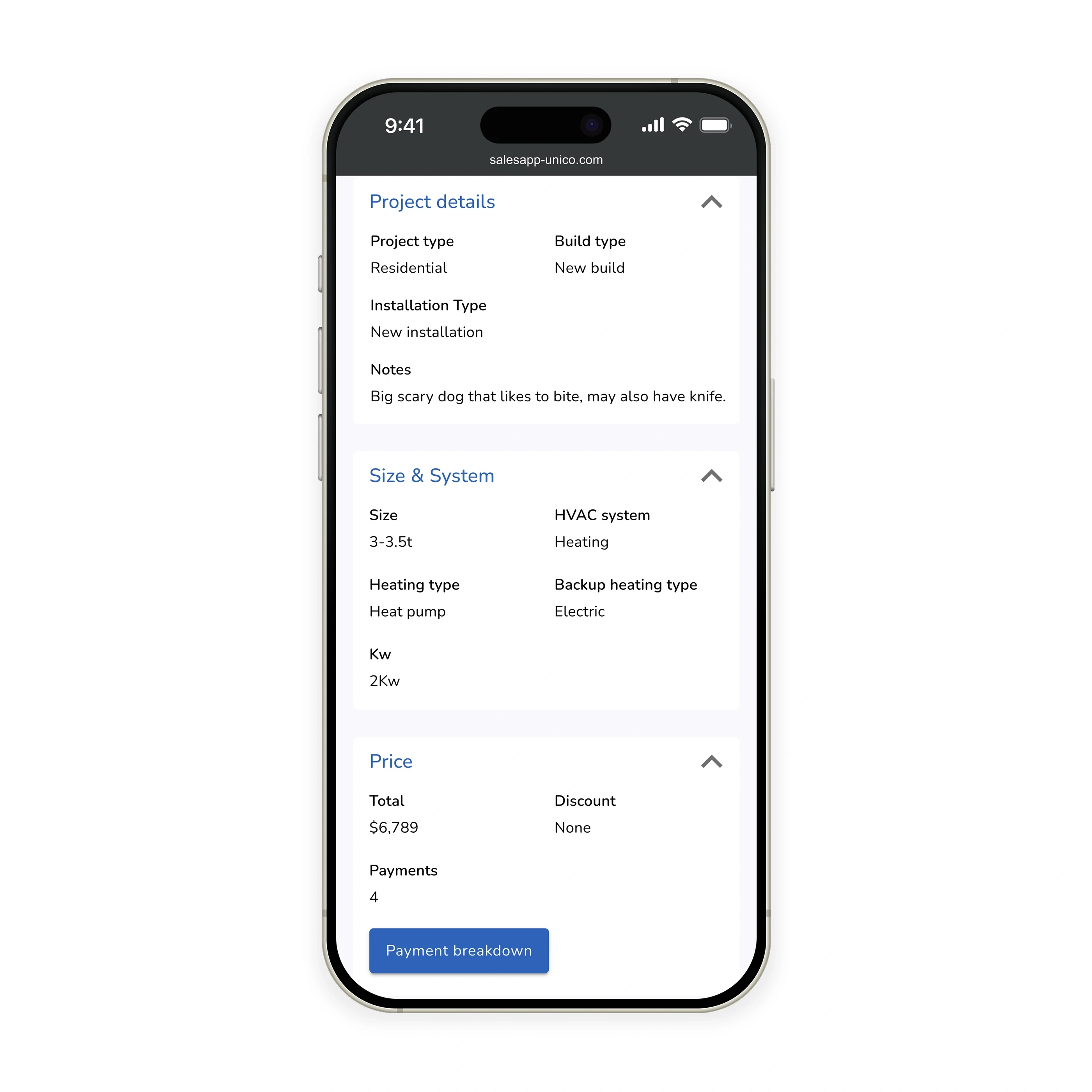
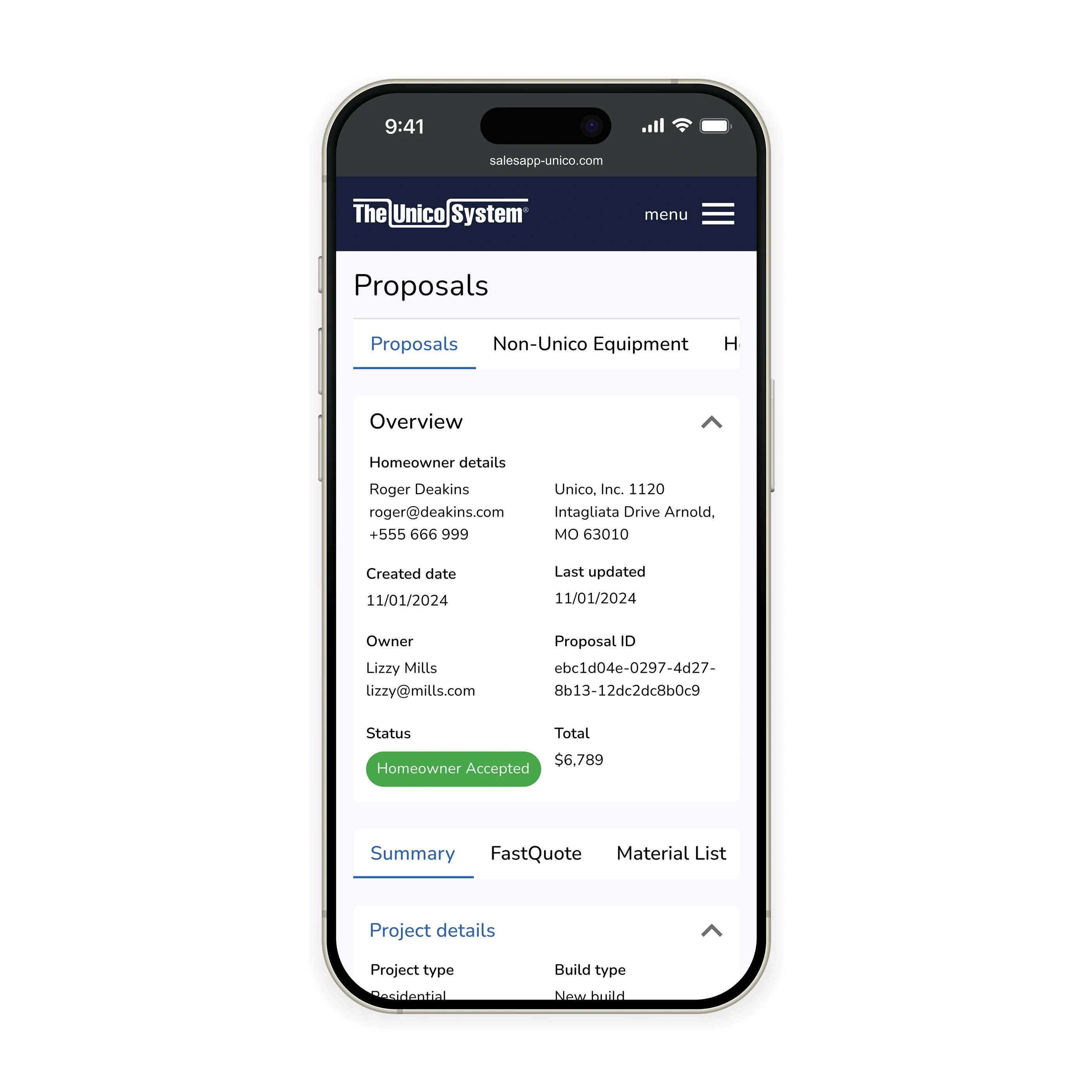
A Fully Responsive Platform: I ensured the entire platform worked seamlessly across desktop, tablet, and mobile.
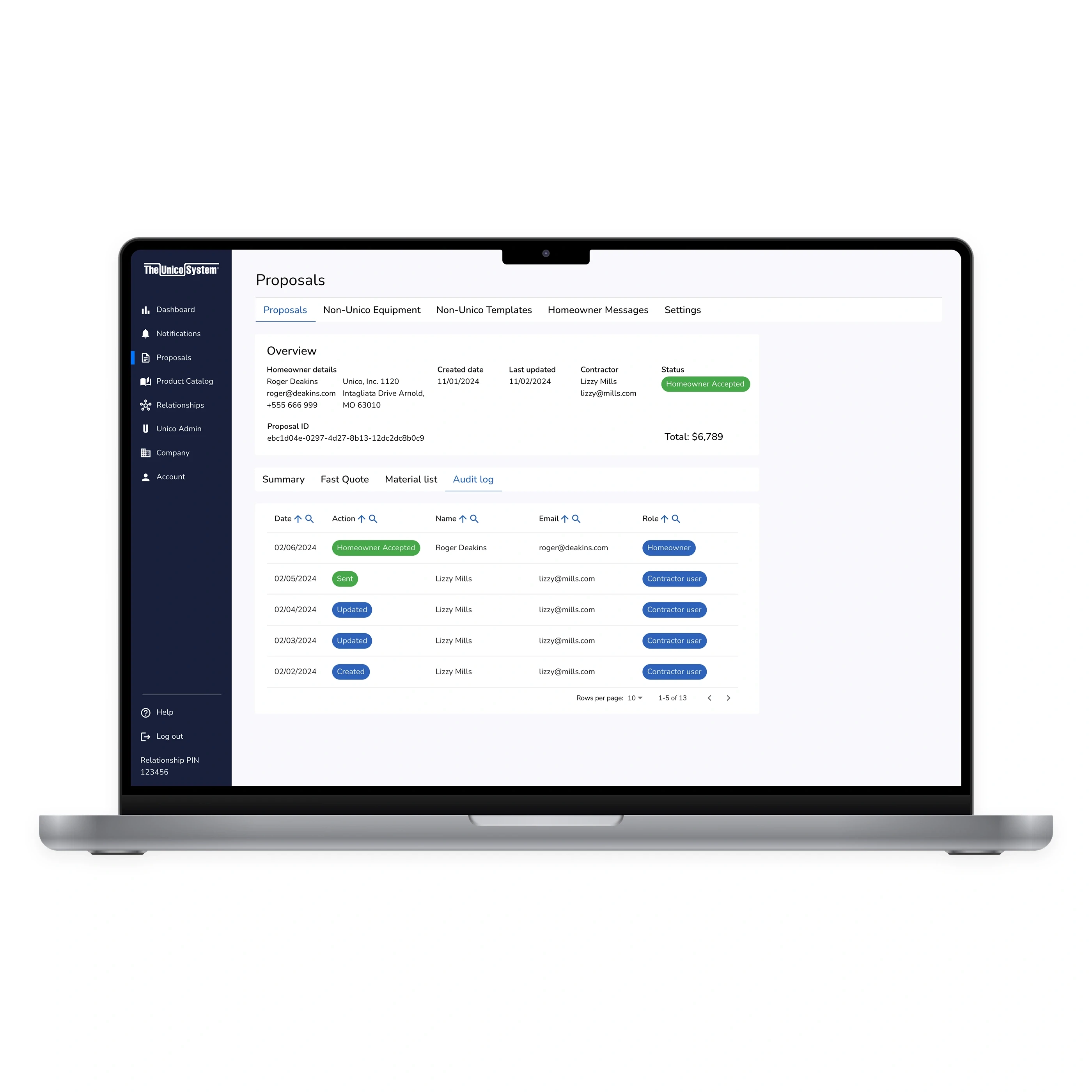
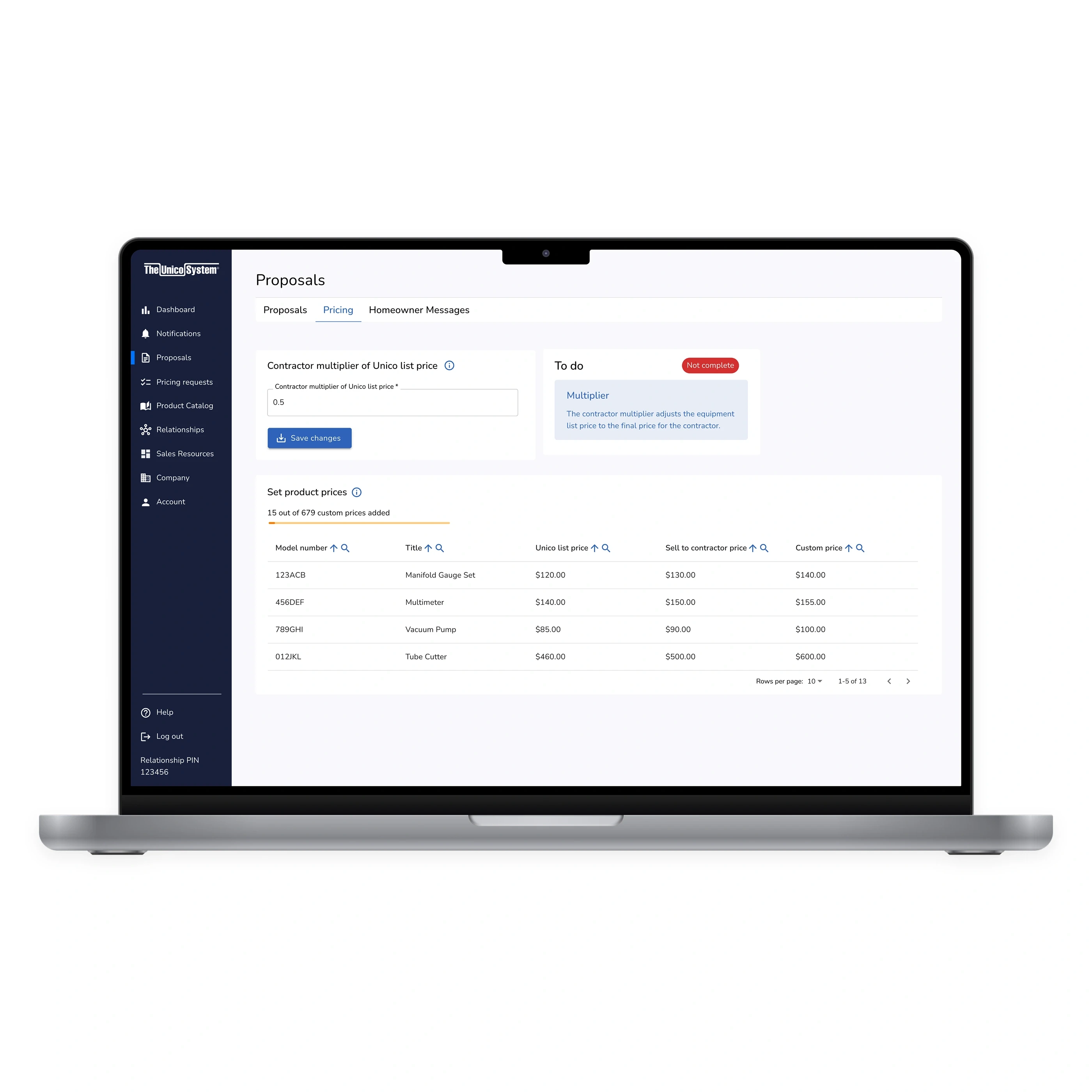
Defining the Platform's Design System: I owned all UI standards: typography, modal and tooltip behaviour, and the design of every data table, including search and filtering.
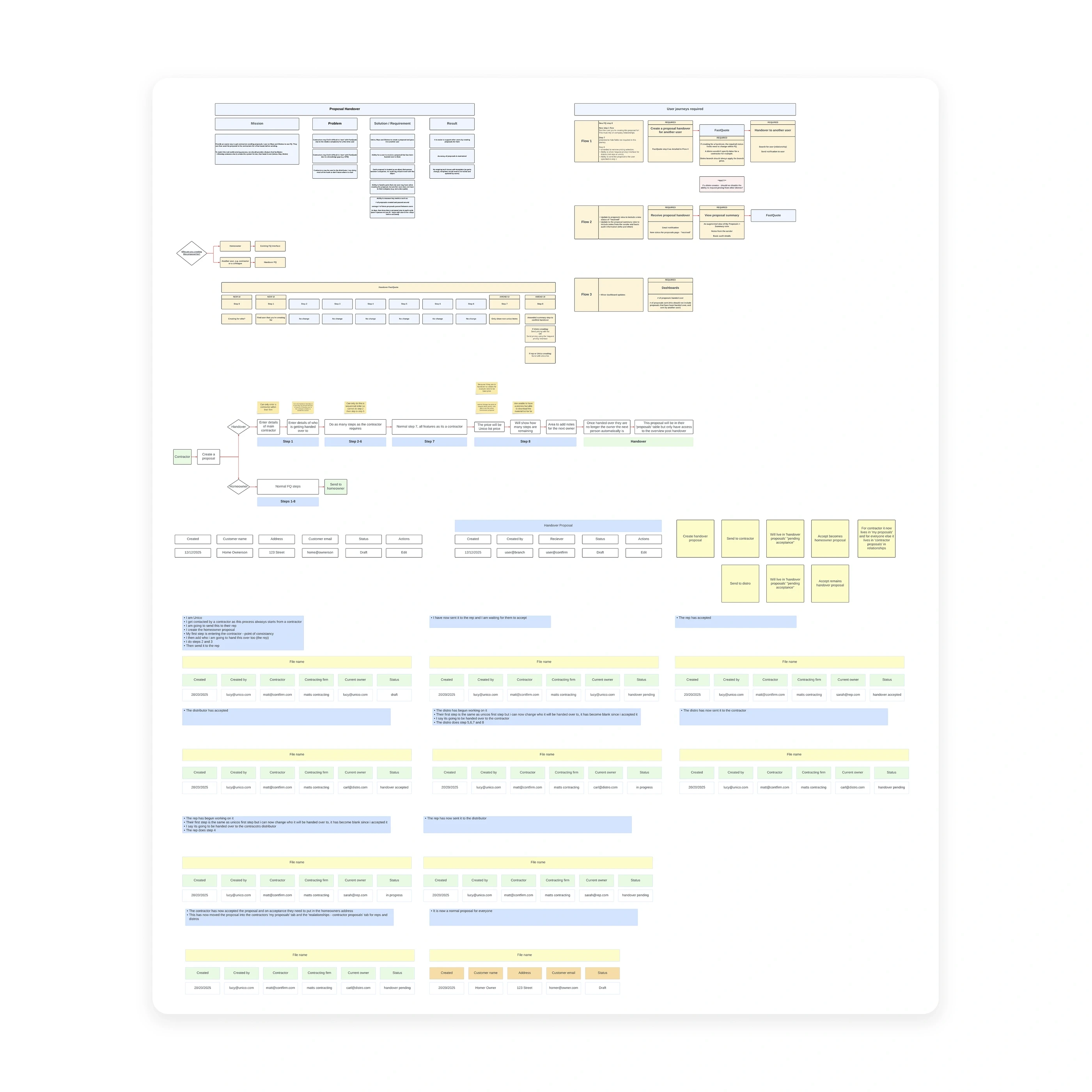
Designing Critical User Flows: I designed the platform's key journeys, including the full onboarding flow across all 6 user groups, and FastQuote, where contractors build out an HVAC design and quote to send directly to the homeowner for approval.
3. Project & Billing Management
Beyond design and delivery, I owned the project's financial tracking. I estimated time and cost for every new feature, then audited the team's actual hours against those estimates myself, chasing engineers directly for accurate time logs. This let me confidently explain to the client exactly why and how a given month's invoice landed where it did, rather than handing over a number with no visibility behind it.
The Solution
The result of this two-year product development process was a complete, robust, and user-friendly enterprise platform. My core focus was on transforming a complex system into a single, cohesive, and intuitive experience.
1. A Clear & Cohesive Navigation
My overhaul of the PoC navigation introduced a minimisable sidebar and a tab-based system. The new information architecture provided a logical structure that worked seamlessly across all 10 of the distinct user sitemaps.
2. A Consistent & Scalable Design System
To ensure a consistent experience, I was responsible for the entire design system. Designing the UI to be dynamic, contextual and having predictable language to the individual user. I defined all UI standards, from the typography and behaviour of modals to the design of all data tables.
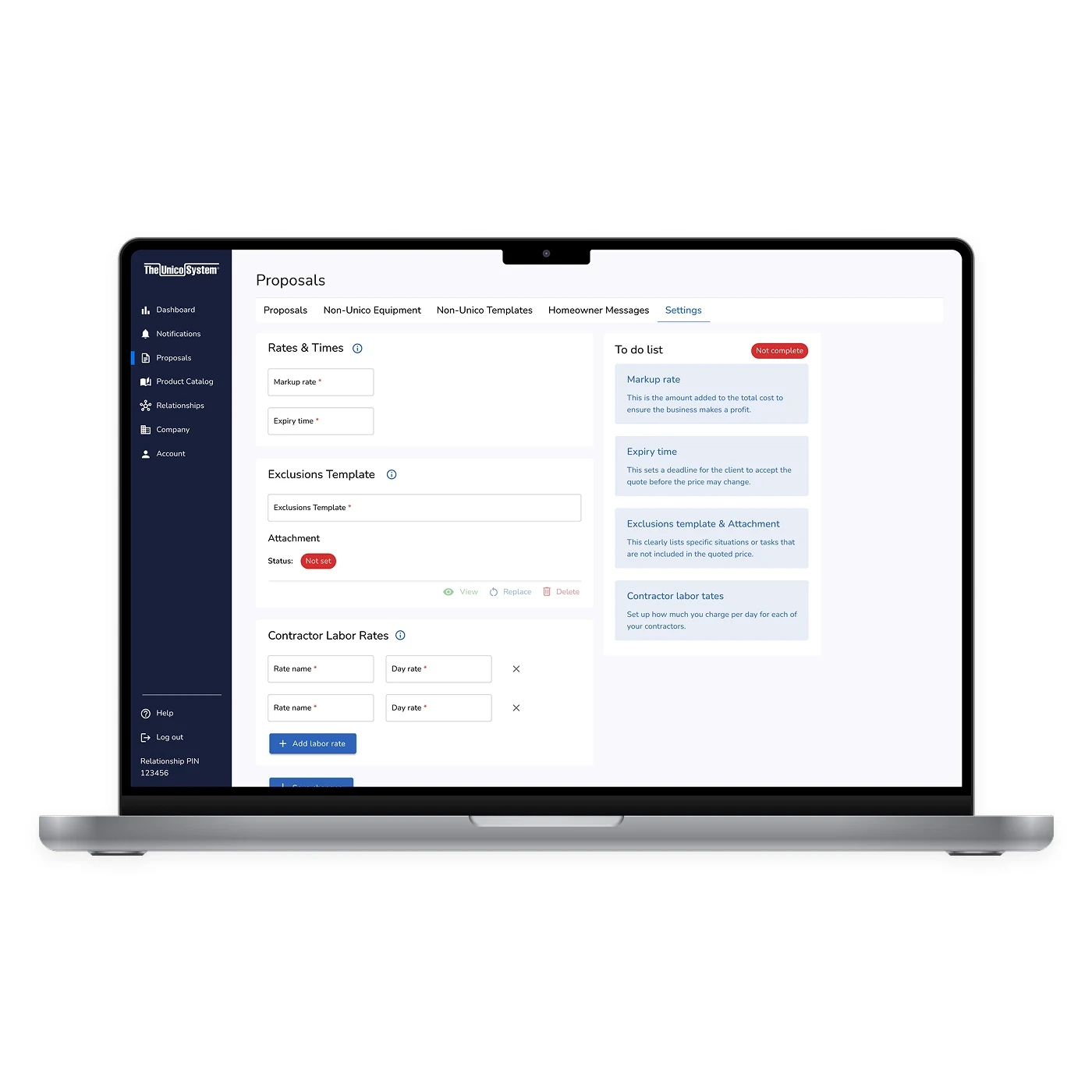
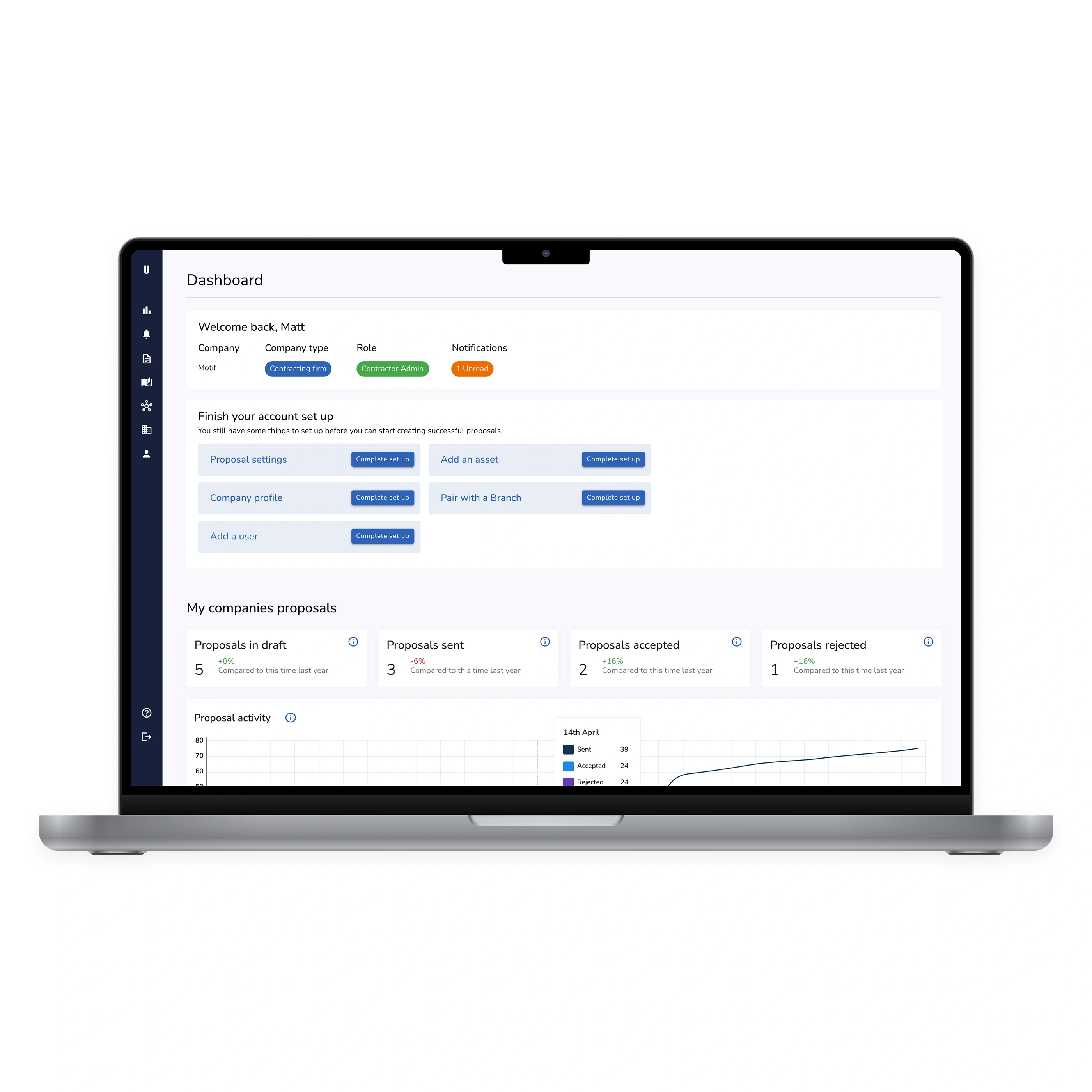
3. An Intuitive Post Onboarding Setup Flow
My new design created a clear, step-by-step user journey tailored to each admin role, guiding them through the complex initial setup of the platform. Crucially, their users were proactively alerted if a required area hadn't been configured, which prevented confusion and made the system's status clear to everyone.
The Outcome & Reflection
The result was a single, cohesive platform unifying 6 user groups across 11 access tiers, from platform admins to homeowners, replacing a fragmented legacy system with something that genuinely worked for everyone from tech-savvy sales reps to hands-on contractors. It is now used by around 2,000 people, and FastQuote cut quoting from weeks to minutes. It was well received by distributors and contractors at industry expos, and adopted into daily production use across all user types.
My final task was to lead the full knowledge transfer, handing over the platform and its entire design system to the client’s internal team. It taught me one of the most important lessons of any long-term product design engagement: the job isn’t just to design a great product, it’s to build documentation and systems robust enough that the product can keep evolving long after you’ve moved on.